the bed that rises, and
leaves everything in place.
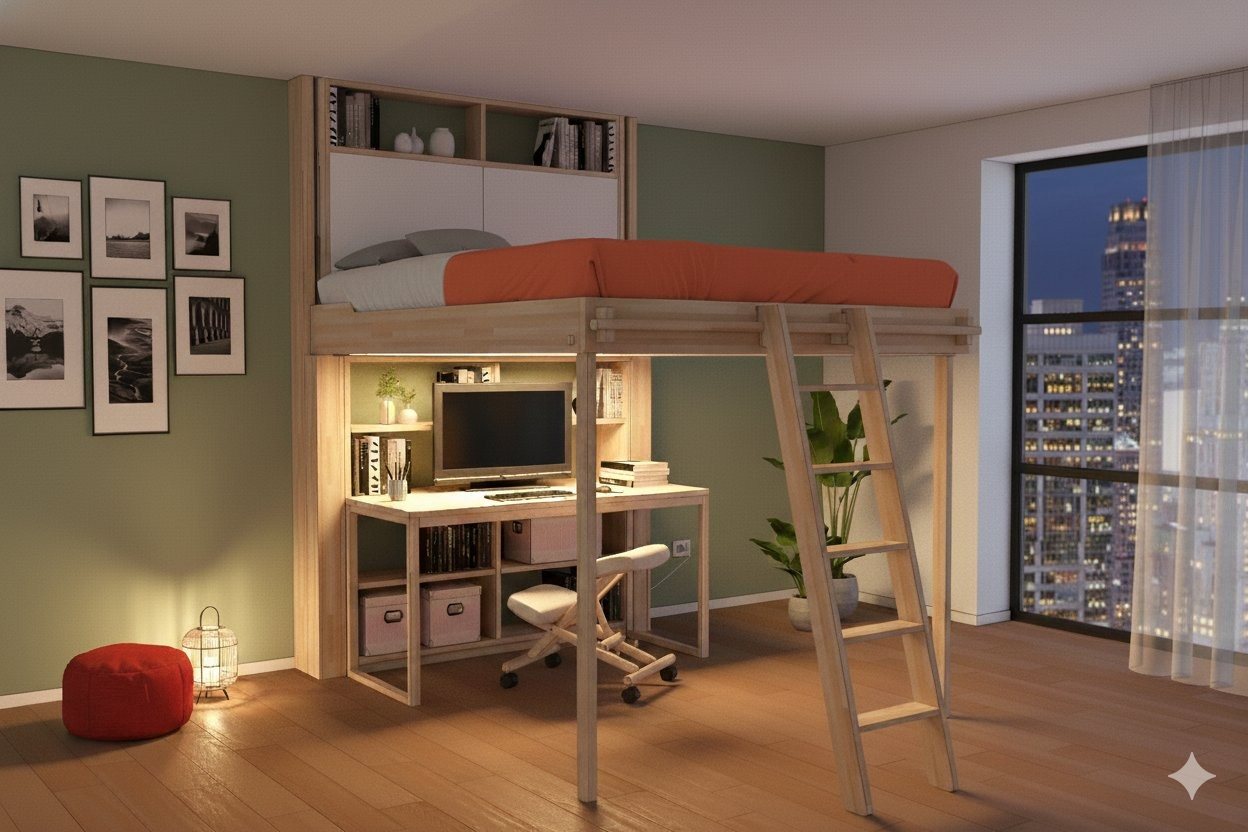
Two rails fixed to the wall. Press a button and the whole bed — made, mattress and all — travels straight up and stops close to the ceiling; the legs fold away underneath it and the floor is completely clear. Underneath, what you already have stays exactly where it is: the desk, the sofa, the bookcase. Nothing gets cleared away at night, the way it does with a wall bed or a sofa bed.
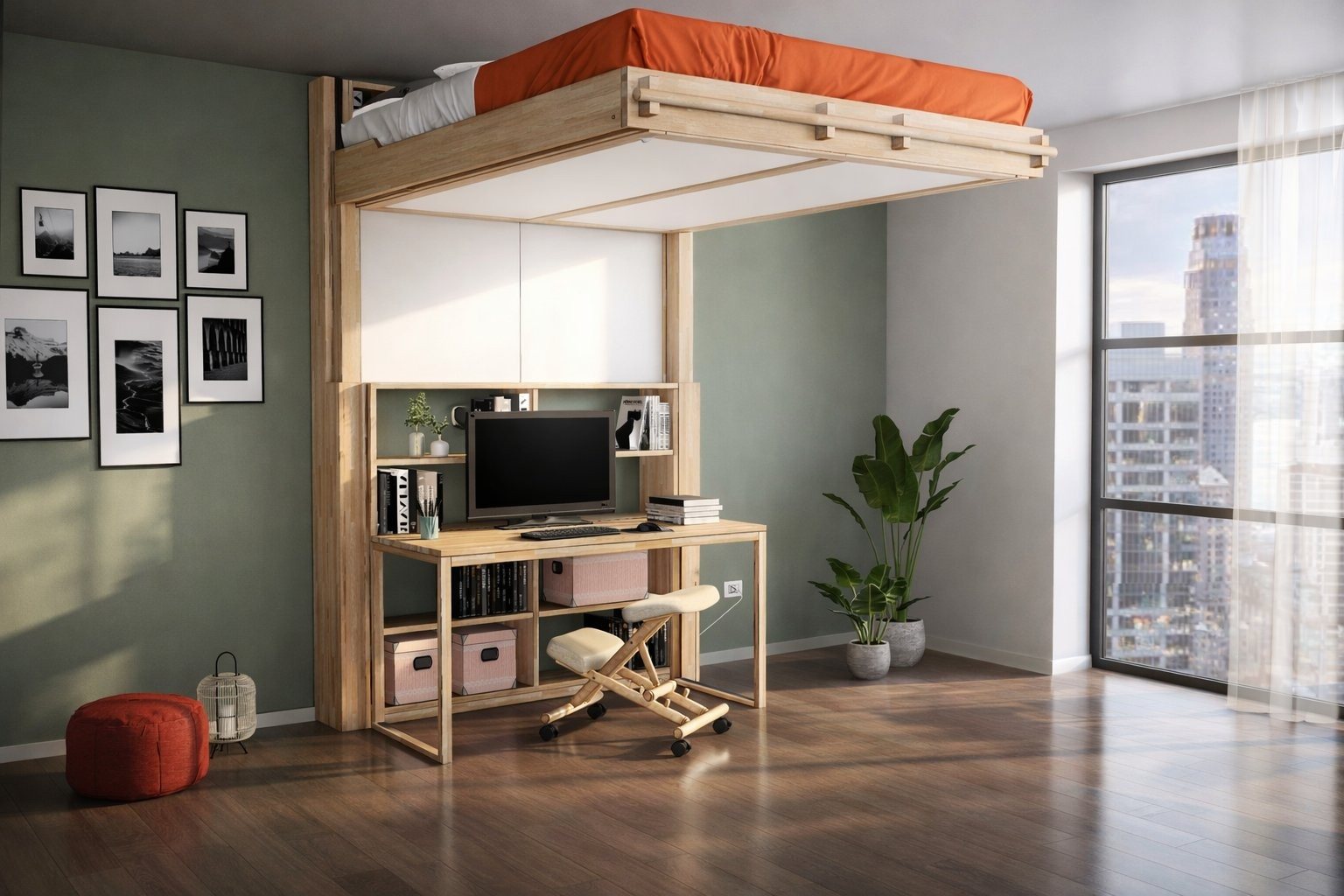
Day: the bed is up by the ceiling and the room is free.
one button.
the room is free.
Nuvola comes from a simple idea: freeing the floor shouldn't mean wrestling a wall bed, and it shouldn't cost you the middle of the room either. Two rails fixed to the wall, two electric motors, and legs that fold away under the platform when it goes up: the bed travels straight up and down along the wall, above whatever is already there.
By day the room is free. At night the bed comes down, and nothing underneath has to be moved. Nuvola is only ever a bed, though: twin, full, queen, king — it takes the mattress and nothing more. If you need a sleeping area rather than a bed, that is what Rising is for.
the numbers that matter.
it's a bed. you order it like one.
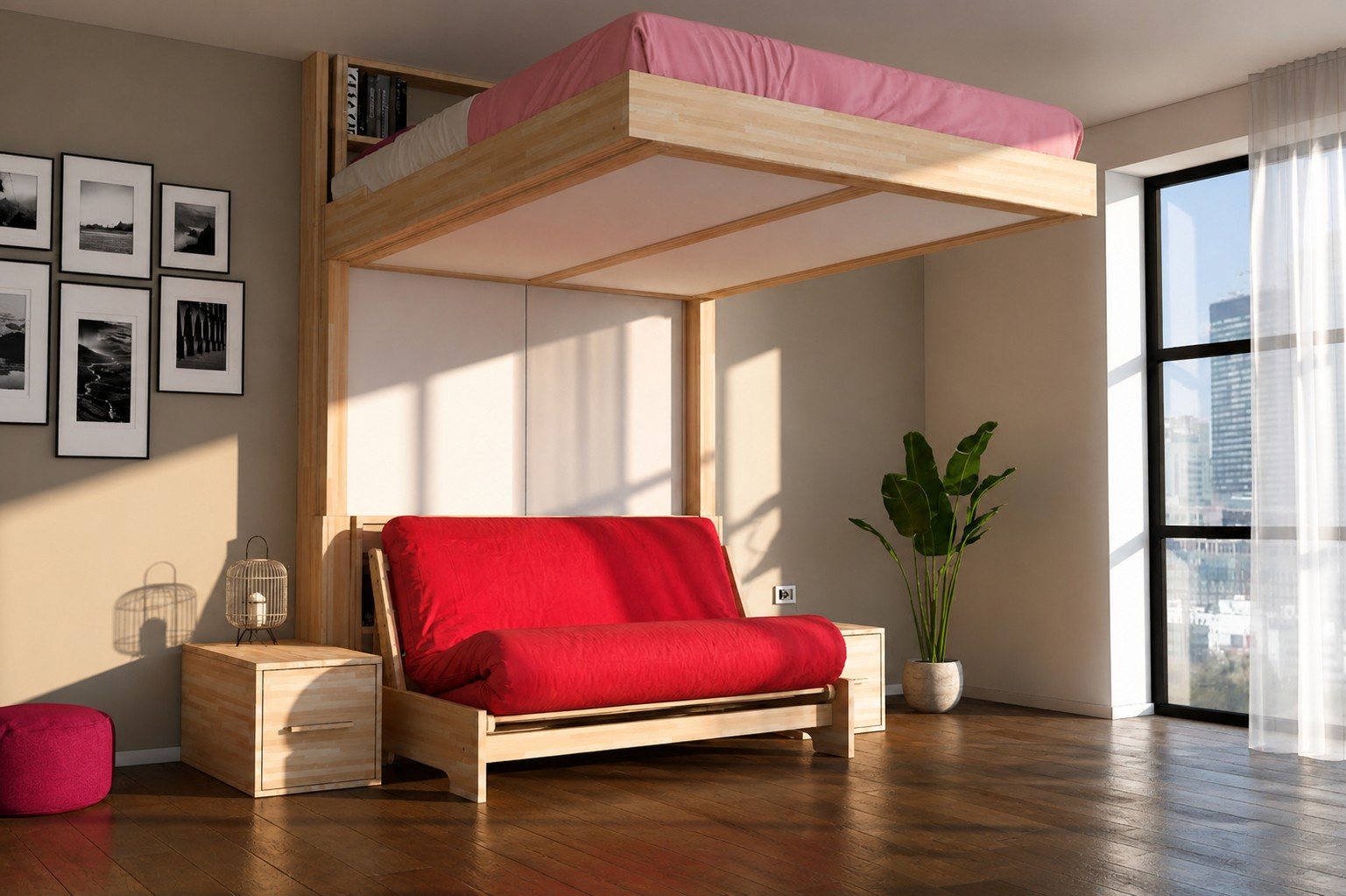
Twin, full, queen, king. The mattress is the one you would buy in any store. What goes underneath is up to you — a desk, a sofa, a wardrobe, or simply an empty floor — because the bed rises above whatever is already there.
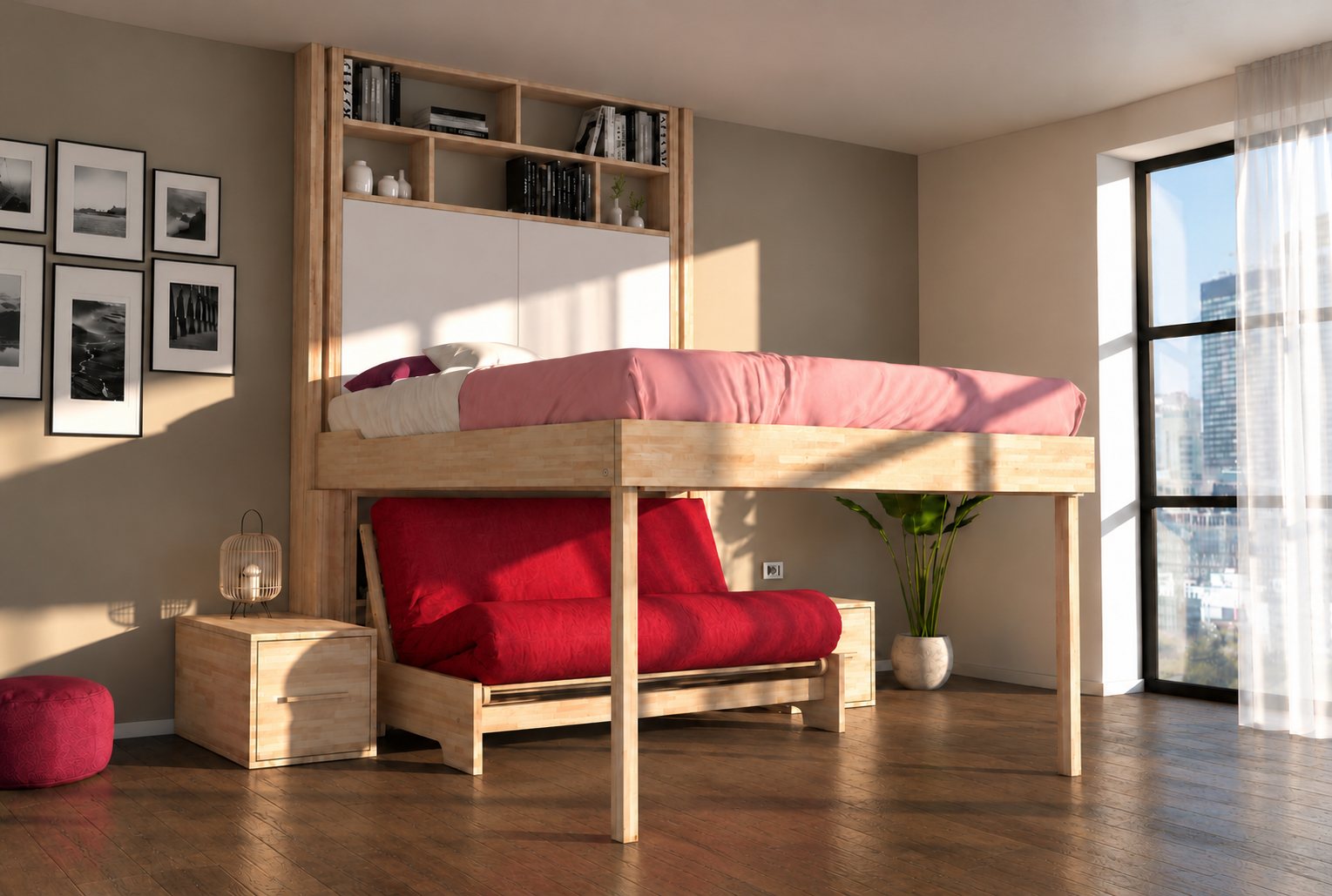
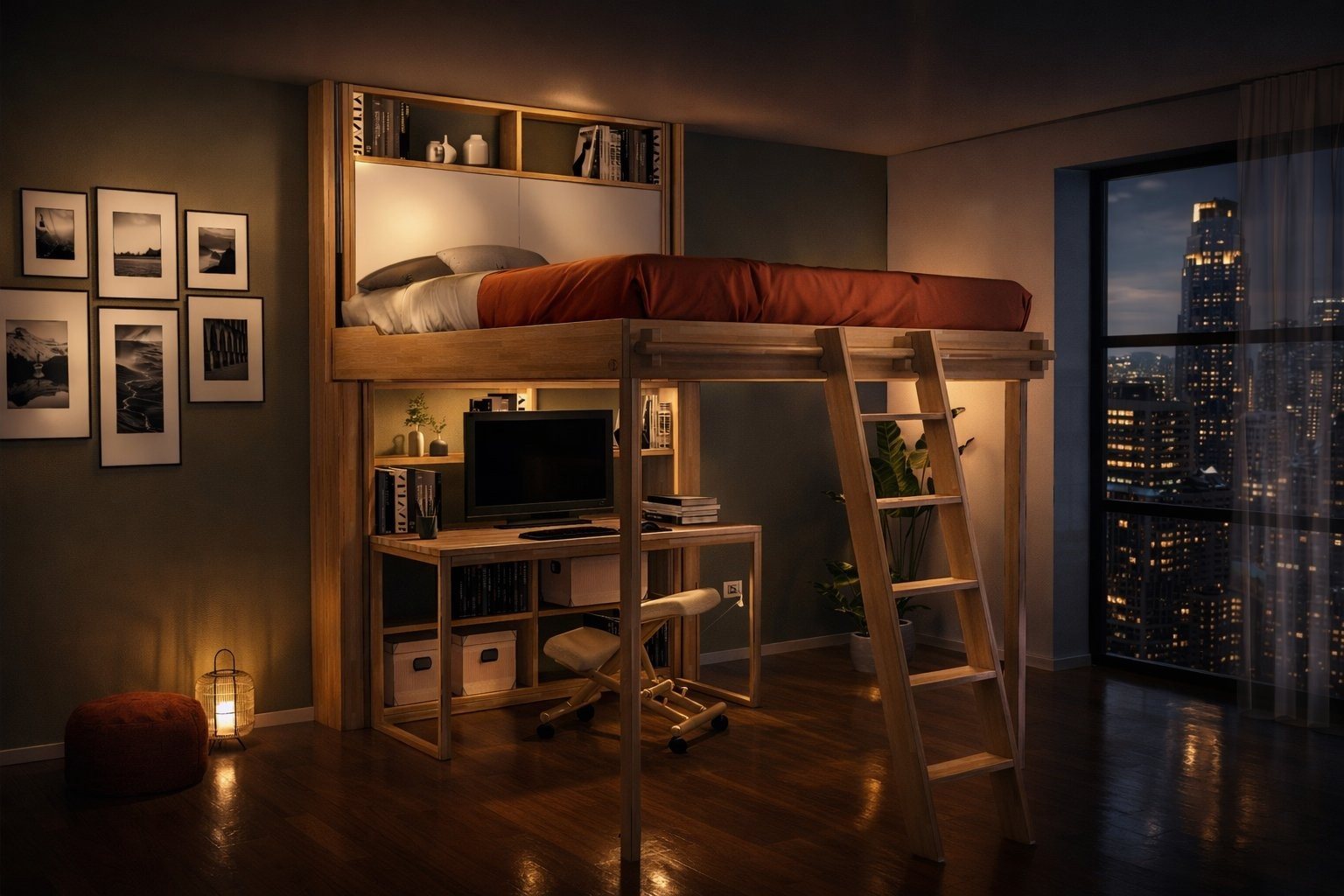
nothing to clear
away first.
- A Murphy bed needs the floor in front of it clear before it comes down — every single time. Nuvola travels straight up and down along the wall and stops above your furniture: what is underneath stays underneath.
- A Murphy bed has to be stripped and folded by hand, every day. Nuvola rises made — pillows, duvet and all.
- A Murphy bed is a cabinet against the wall, with the depth of a cabinet. Nuvola is two rails on the wall and a pair of legs that fold away when it rises: raised, the floor is clear, and there is no wardrobe-sized box against the wall either.
- A Murphy bed stores the mattress on its side. Nuvola keeps it flat, the way a mattress is built to rest.
- Counterweight systems ask for real physical effort and regular maintenance of cables and pulleys. Twin electric motors ask for a button.
honest by design.
- The rails fix to the wall. Before ordering, check that the wall can carry the load: the instructions set out what to look for and when to call in a professional.
- Decide early how high you want it to stop. Around 47" clears a sofa and 51–53" clears a desk, so the room works twice; lower it further and you can climb in off a single wooden step, but then only an open sofa bed fits below — and not one you can sit up on.
- Above roughly 47", plan the steps up to the bed with us: rungs or storage cubes, made to measure.
- Never operate the platform with people on it: you get in when the bed is fully lowered.
- Anti-obstacle sensors stop the platform if anything is in its path, and an automatic lock holds it in position.
- If you want living space under the bed and not just a clear floor, look at Rising: it is a real loft, built to measure beyond the mattress footprint.
- Five-year warranty on the motorized structure and the carpentry.
asked and answered.
What is the minimum ceiling height?
8'1", and anything taller works. Not sure about yours? Send us the measurement — the consultation is free.
How is it different from a Murphy bed?
A Murphy bed folds into a cabinet and needs the floor in front of it clear every time you open it. Nuvola travels straight up on two wall-mounted rails, stays made, and asks you to move nothing: it stops above your furniture, which stays where it is.
How is it different from Rising?
Two things. Nuvola runs on two rails fixed to the wall and its legs fold away when it rises, so by day nothing stands on your floor; Rising stands on four columns, and depending on the layout one or two of them stay out in the room. And Nuvola is only ever a bed, in standard mattress sizes, while Rising is built to measure and can be far wider than the mattress — nightstands alongside, or a whole sleeping area.
How high should it stop?
Around 47" clears a sofa, 51–53" clears a desk — at those heights the room does double duty. Lower it further and you can climb in off a single wooden step, but then only an open sofa bed fits underneath, and not one you can sit up on.
How much weight does it hold?
Up to 440 lb, engineered with a 3× structural safety factor.
How loud is it?
Under 35 dB. No chains, no squeaking pulleys.
What sizes are available?
Standard mattress sizes: twin, full, queen and king. The mattress is the one you would buy in any store.
How is it assembled?
Nuvola ships with clear step-by-step instructions. Basic hands-on skill and ordinary tools — a drill, a level, a screwdriver — are all it takes. Because the rails fix to the wall, check before ordering that the wall can carry the load.
Can I control it from my phone?
Yes — a remote is included, and the iOS/Android app adds timers and preset day and night scenes.
two minutes, one tape measure.
Every ceiling works — what changes is what you can keep underneath. Stand where the bed will go, measure floor to ceiling, and type the number in.
The bed always stops far enough below the ceiling for you to sit up in it — 41" to 49" above the mattress, more as ceilings get taller. Whatever is left underneath is room you get back, and unlike a wall bed or a sofa bed, none of it has to be cleared away at night. Figures for standard motors.
Got a number you like? Send it over with the room and we'll draw it.
the room is bigger than the bed lets you think.
Send us your room measurements — width, depth, ceiling height — and we'll tell you exactly what Nuvola can do in it. Consultation and first proposal are free.
Request a quote