the loft that leaves
everything in place.
A solid-wood loft on four floor-to-ceiling columns that adjusts its height electrically. Built to measure, it can be wider than the mattress — room for nightstands alongside, or a whole sleeping area rather than just a bed. And whatever you keep underneath never has to be moved.
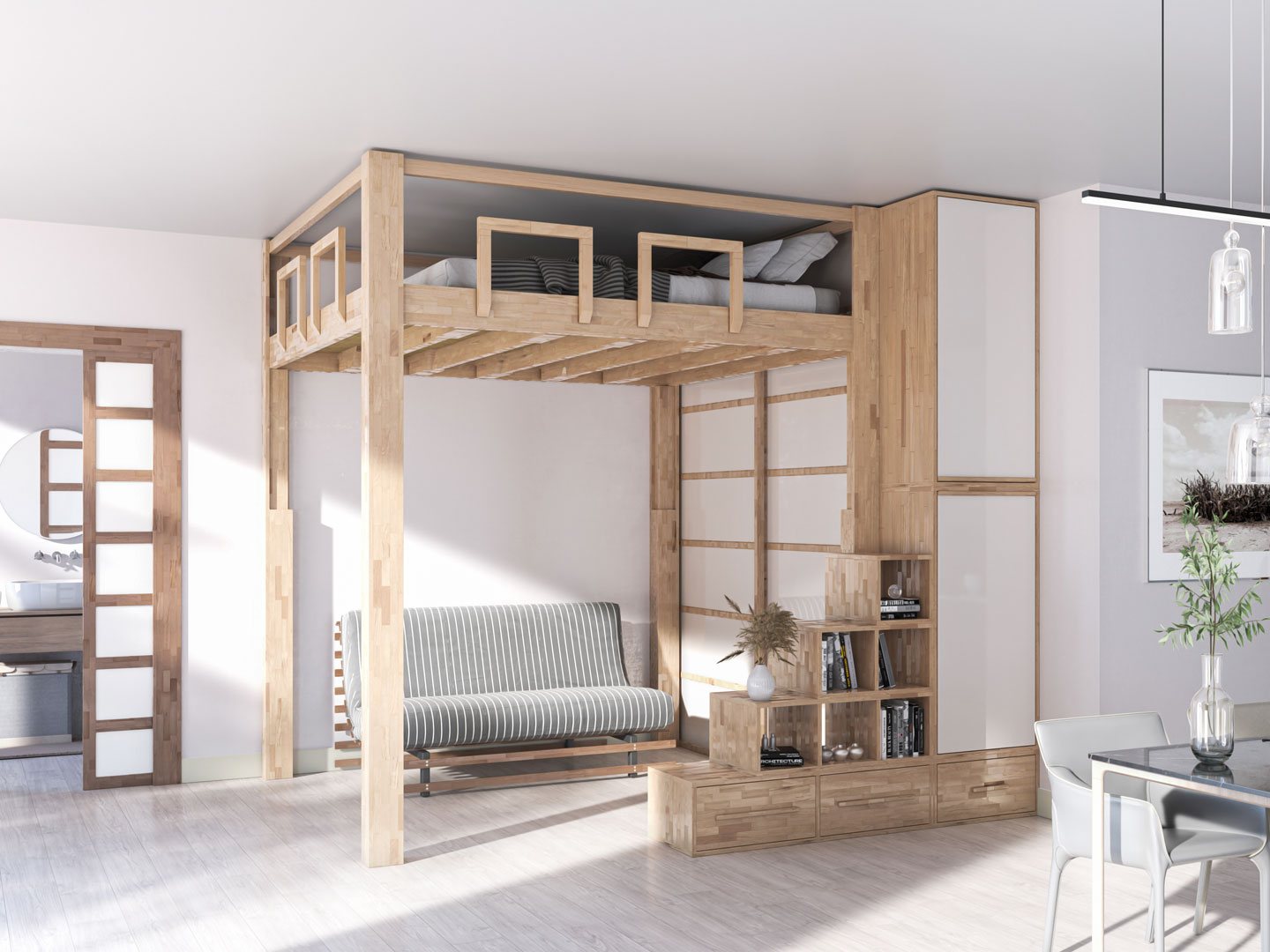
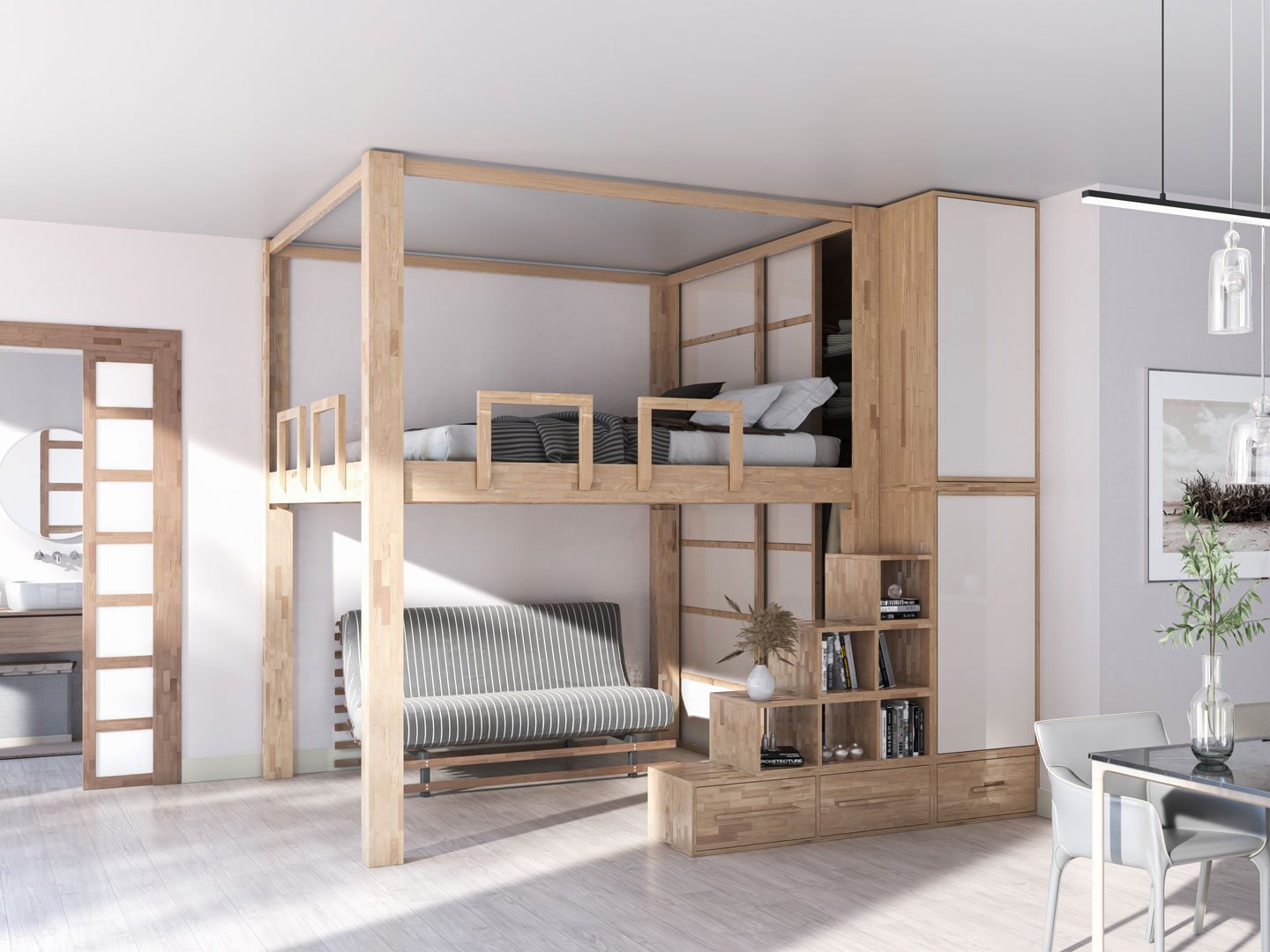
Raised: the full footprint of the bed stays available.
one button.
two rooms.
Rising travels on four motorized floor-to-ceiling columns in solid laminated beech. Push a button — wired or wireless remote — and the platform stops at any height you set: high to free the space below for a desk or a sofa; low to climb in over three or four steps.
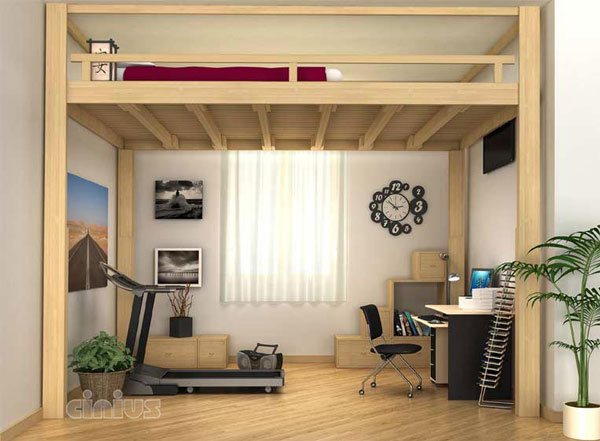
Lowered, the platform stops 3′ 11″ to 5′ 3″ off the floor, depending on your ceiling — high enough that the desk, the sofa, the chest of drawers stay exactly where they are, and you can go on using them. Because the loft is made to measure, it can also be built wider than the mattress, with space alongside for nightstands.
the numbers that matter.
honest by design.
- Rising stands on four columns. Set against two walls, one of them still stands out in the room — worth deciding up front whether that works for your layout. We show you exactly where it lands before you order.
- A ladder is part of every Rising, not an afterthought: rungs or storage cubes, made to measure for the height you settle on.
- Rising anchors to two walls, or to floor and ceiling when placed away from walls. The wall fixing uses two standard wall anchors.
- Never operate the platform with people on it: you climb in only when the bed is fully lowered.
- Ideal mattress height: 7–8". Safety railings are recommended on all open sides, 6" above the mattress.
- Clear height under the bed when it is lowered: 3′ 11″ at a 7′ 10″ ceiling, 4′ 9″ at 8′ 10″, 5′ 3″ at 9′ 10″. Raised, add 26½″ — you can stand underneath.
- Assembles as furniture, not construction: no renovation, no masonry.
- Featured in Cose di Casa, May 2024.
asked and answered.
What is the minimum ceiling height?
7'10", and anything taller works. Fully lowered, there are 41–49" between the mattress and the ceiling, depending on ceiling height — enough to sit up in bed comfortably.
How far does it travel?
26½" with standard motors; 37½" with long-travel motors on request. The platform stops at any preset height, so the furniture below never moves.
How much weight does it hold?
Fully lowered: up to 1,100 lb on the structure. The standard motors lift a combined 660 lb; stronger motors are available.
What if the power goes out?
Lowered, the bed works like any bed. An optional UPS raises or lowers the platform without power.
How is it assembled?
Rising ships with clear step-by-step instructions. Basic hands-on skill and ordinary tools — a drill, a level, a screwdriver — are all it takes. No special work, no masonry.
Can it stand in the middle of the room?
Yes: away from walls, the four columns anchor to floor and ceiling and there is clear space all around. Against walls it anchors to the walls, and can run from one wall to the other.
Will a column be in the way?
Rising stands on four columns, and depending on how it sits against the walls one or two of them stay out in your floor space. It is the real trade-off against Nuvola, which hangs off the wall and leaves the floor clear — and what you get for it is size: Rising is built to measure and can be far wider than the mattress. We show you exactly where the columns land before anything is ordered.
How do I get up to it?
With a ladder, and it is part of the project rather than an accessory you hunt for afterwards: rungs or storage cubes, made to measure for the height you settle on.
What is the platform made of?
Tatami panels over solid-wood slats: walkable, breathable and insulating. Other floorings are available on request.
Does anything underneath have to be moved?
No — that is the whole point. Lowered, the platform stops 3′ 11″ to 5′ 3″ off the floor depending on your ceiling: the desk, the sofa, the bookcase stay where they are, and stay usable.
the numbers, drawn.
Two heights decide every Rising: the room under the bed, and the room above the mattress to sit up. Here they are at three common ceilings, bed up and bed down.
Standard motors, 26½″ of travel. Orange: space above the mattress. Black: clear height under the bed.
two minutes, one tape measure.
Every ceiling works — what changes is what you can keep underneath. Stand where the bed will go, measure floor to ceiling, and type the number in.
The bed always stops far enough below the ceiling for you to sit up in it — 41" to 49" above the mattress, more as ceilings get taller. Whatever is left underneath is room you get back, and unlike a wall bed or a sofa bed, none of it has to be cleared away at night. Figures for standard motors.
Got a number you like? Send it over with the room and we'll draw it.
up close.
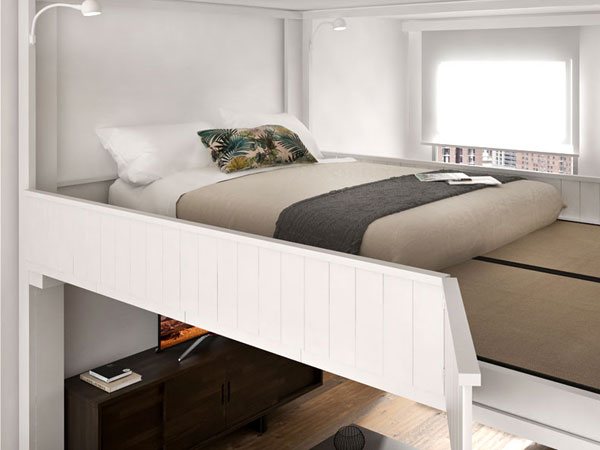
The platform is more than a bed base. Tatami panels over solid-wood slats make it walkable, so there is floor around the mattress — room to sit, to make the bed standing up, to keep a book and a lamp within reach.
The railing is solid wood, built as part of the structure, and it sits 6″ above the mattress on every open side.
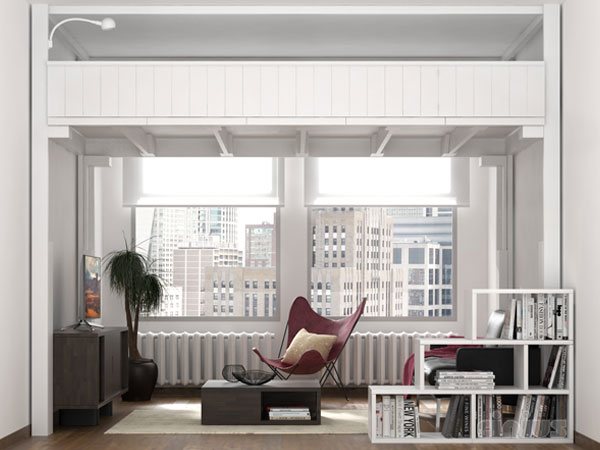 Up
Up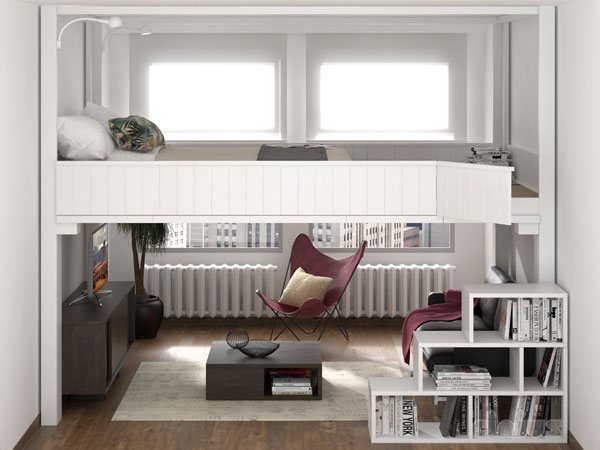 Down
DownWhite finish, wall to wall. Same room, same chair — the bed moves, the room stays.
see it move.
Videos load from YouTube only when you press play.
up, and down.
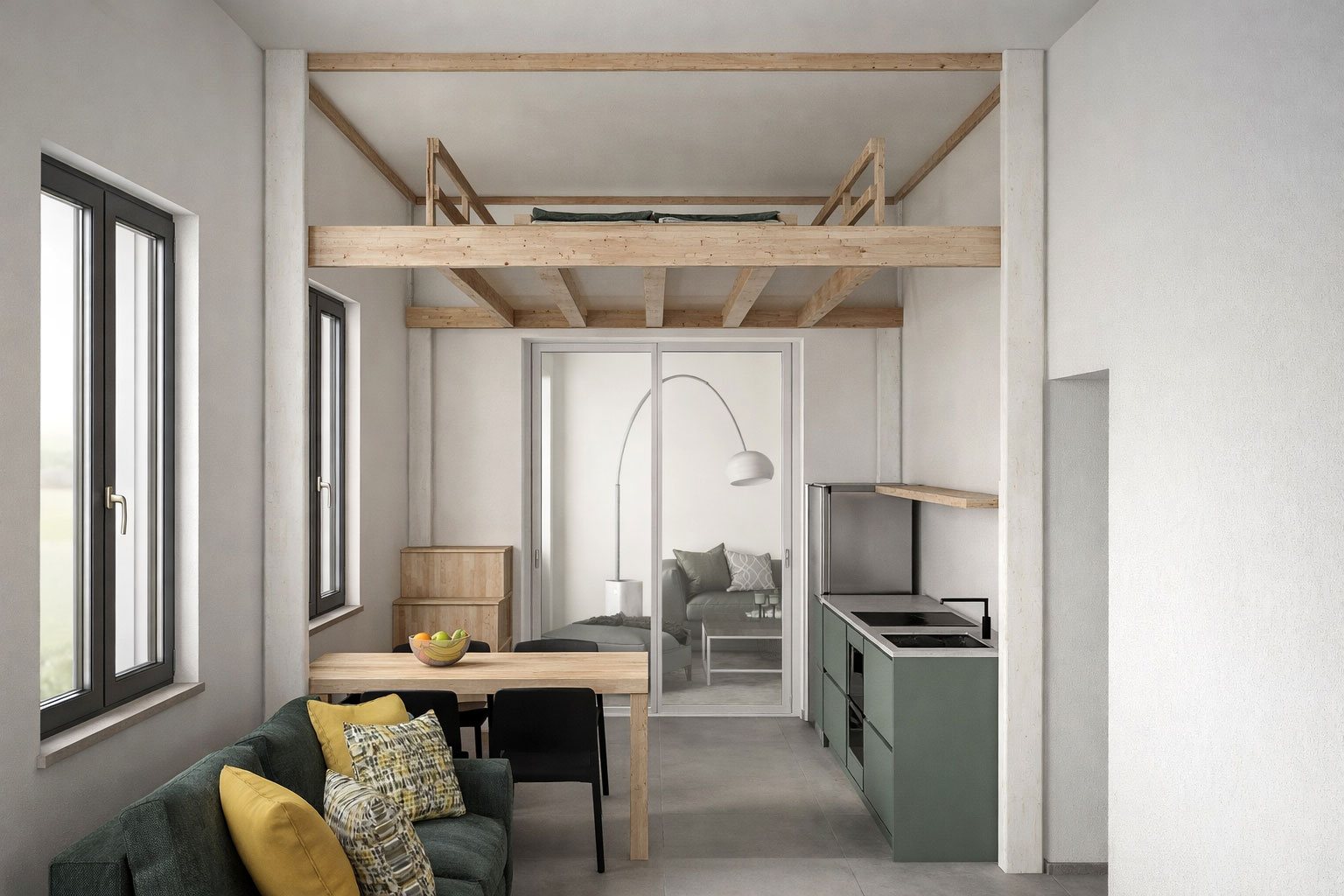
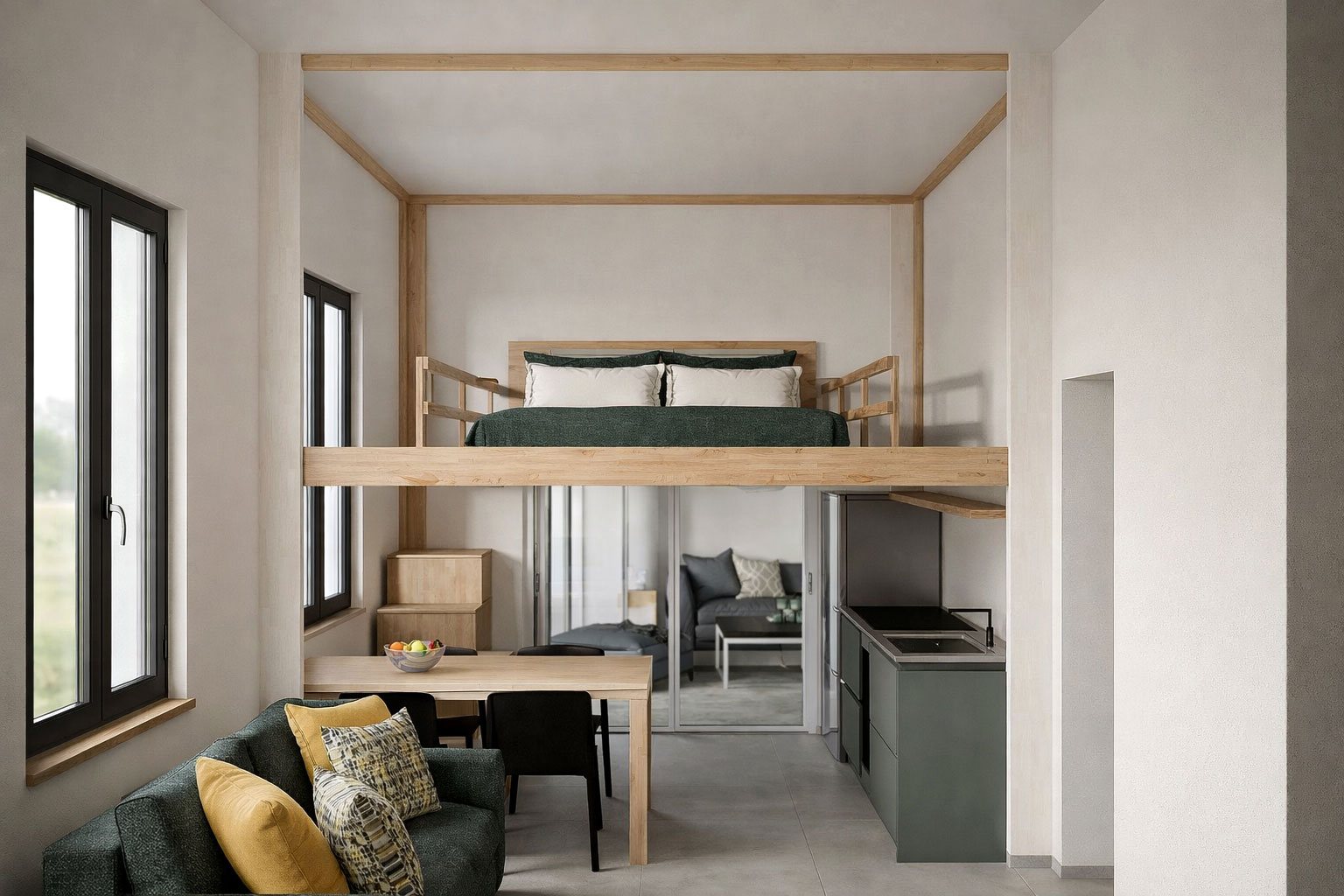
Every Rising is built to measure. Each pair is the same room: bed up, bed down.
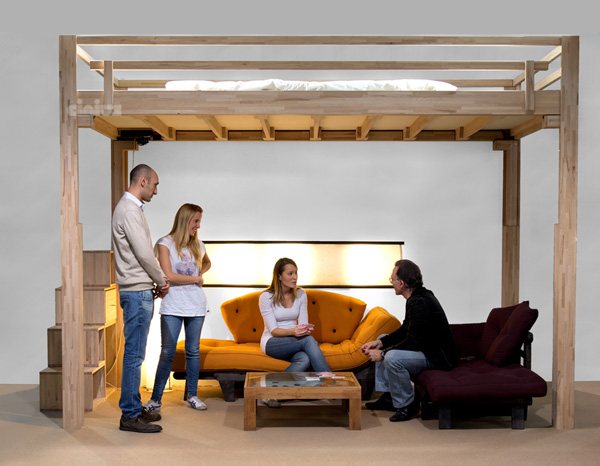 Up
Up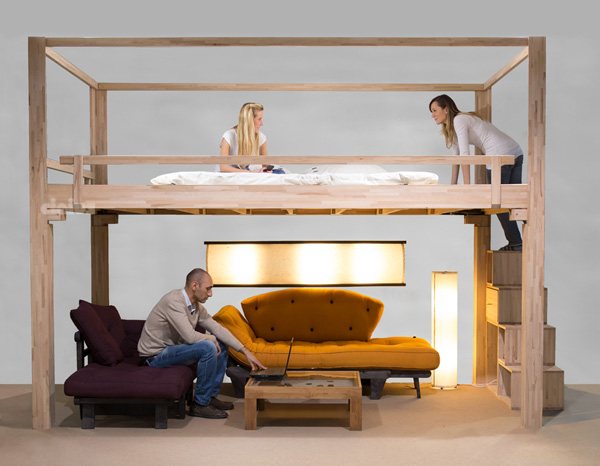 Down
DownFree-standing on four columns: a living room underneath, the bed above.
 Up
Up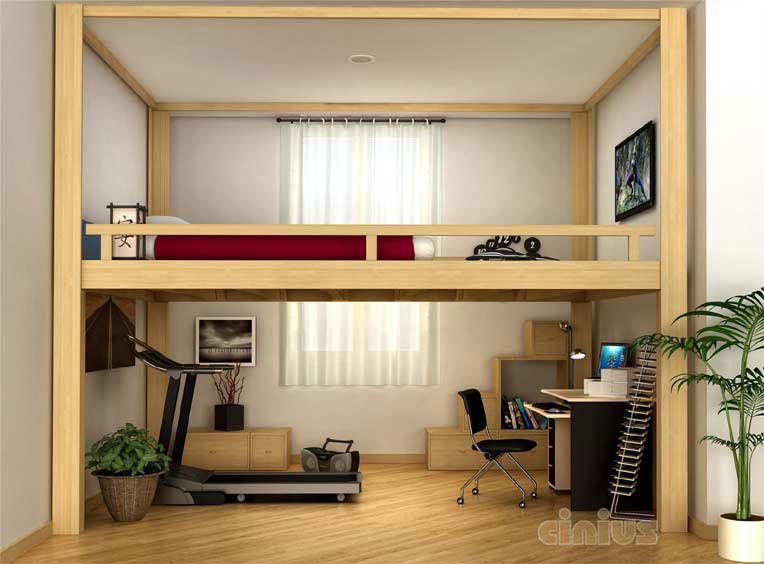 Down
DownWall to wall, natural beech, essential railing.
 Up
Up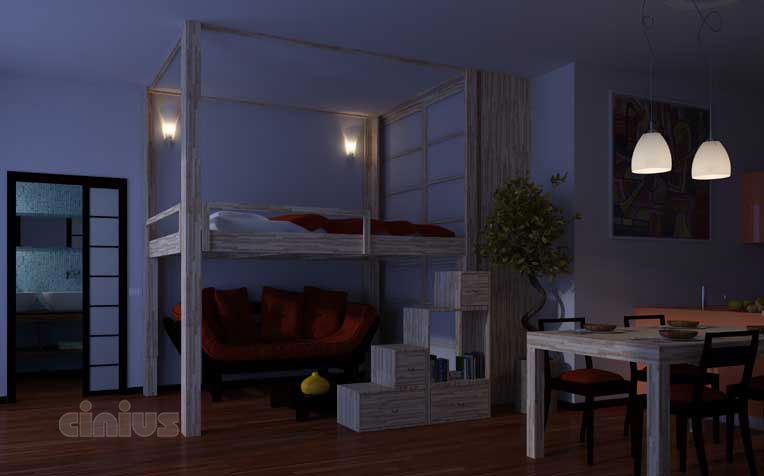 Down
DownIn an open-plan living room, with storage steps.
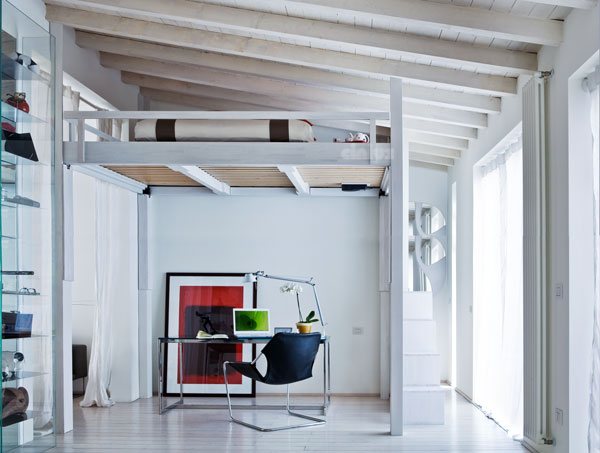 Up
Up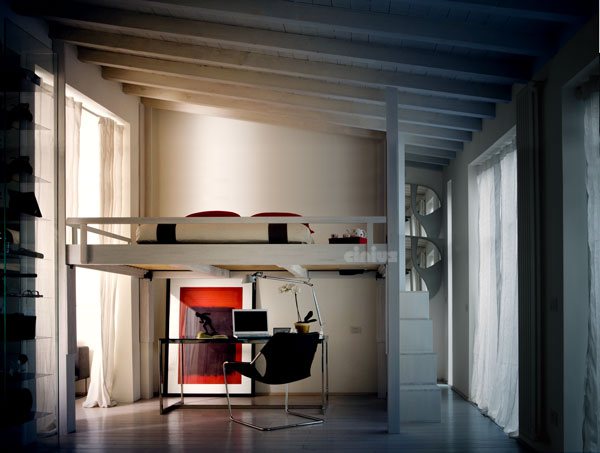 Down
DownUnder exposed beams, with a study below.
UpDownAgainst a wardrobe, with storage steps and a futon.
UpDownIn a studio: kitchen and dining stay free below.
your ceiling is taller than you think.
Send us your room measurements — width, depth, ceiling height — and we'll tell you exactly what Rising can do in it. Consultation and first proposal are free.
Request a quote